01Research page (coming soon)
Scientific machine learning
Model-aware learning methods that respect physical constraints, reveal useful latent structure, and remain dependable beyond the training data.
Mathematics · Scientific discovery · Learning
I am a Professor of Mathematics at Emory University. My research connects scientific machine learning, inverse problems, and numerical linear algebra to make complex systems more understandable and computable.
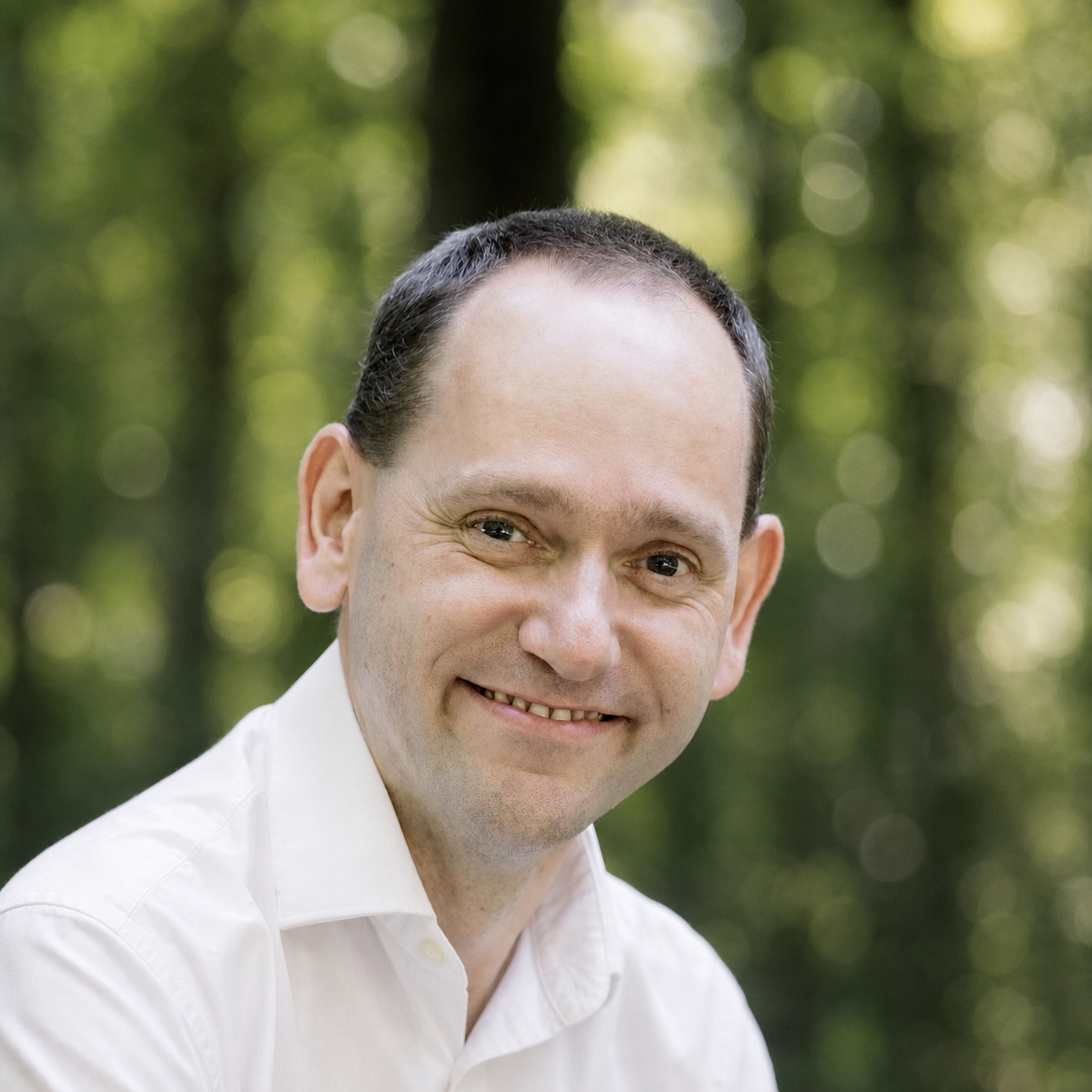
Matthias “Tia” ChungProfessor
Department of Mathematics
Research initiative
A new framework for learning compact surrogate models of complex physical systems—pairing representations so inference becomes faster, interpretable, and faithful to the governing science.
Research
My group develops computational methods that bring mathematical structure into modern data-driven science.
Model-aware learning methods that respect physical constraints, reveal useful latent structure, and remain dependable beyond the training data.
Fast and robust inference from indirect, incomplete, or noisy observations—with applications in imaging and the physical sciences.
Randomized and structure-exploiting algorithms for large-scale computation, regularization, and uncertainty quantification.
Current highlights
Stochastic and Randomized Algorithms in Scientific Computing: Foundations and Applications.
Faculty fellowship at the Oden Institute for Computational Engineering and Sciences, UT Austin.
USDA-supported precision feeding research and an NSF REU in computational mathematics for data science.
Selected publications
Preprint
Journal of Mathematical Imaging and Vision, 68
Magnetic Resonance Imaging, 129
Machine Learning: Science and Technology, 7(2)
SIAM Journal on Scientific Computing
Journal of Machine Learning for Modeling and Computing, 6(4)
About
Before joining Emory in 2022, I was an Associate Professor at Virginia Tech and an Alexander von Humboldt Fellow at TU Berlin. I received my doctorate in mathematics from the University of Lübeck.
“Seek simplicity, and distrust it.”
Alfred North Whitehead